

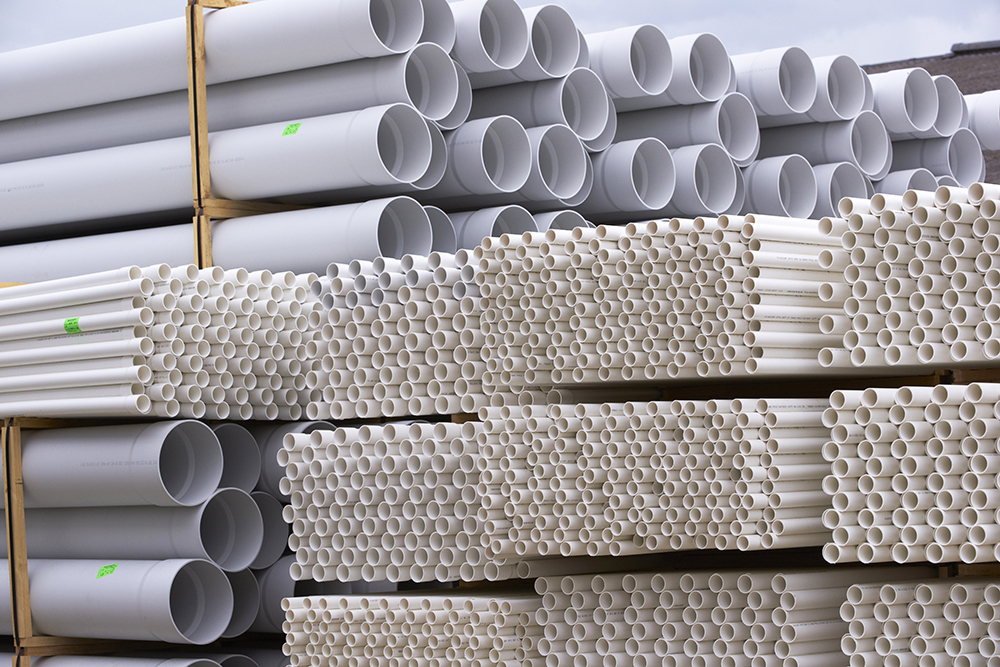
Plascorp has taken a major step in supporting Australia’s shift toward lower-carbon, data-driven construction with the release of independently verified Environmental Product Declarations (EPDs) for its PVC-U pressure pipe range. Published through EPD Hub and compliant with EN 15804+A2 and ISO 14025, the declarations provide designers, utilities and civil contractors with clear third-party verified insights into the environmental performance of PVC-U pressure pipes manufactured in Australia.
As infrastructure delivery faces increasing scrutiny for embodied and operational carbon impacts, transparent product data has become an essential tool for responsible material selection. The new EPDs enable project teams to evaluate lifecycle impacts across raw materials, manufacturing, transport, installation and end-of-life scenarios for the full PN6 – PN18 pressure pipe range including both Rubber Ring Joint (RRJ) and Solvent Weld Joint (SWJ) systems.
This EPD is in addition to the Best Environmental Practice (BEP) PVC certification as audited and verified by an independent third party for the PVC-U range and conduits.
DELIVERING MEASURABLE CARBON DATA FOR SMARTER MATERIAL CHOICES
- Total energy use (A1-A3): 13.3 kWh per kg
- GWP-total (A1-A3): 3.42 kg CO₂e
- Secondary material use: 1.52%
- Net freshwater use: 0.03 m³
- Zero REACH SVHC substances >0.1%
AUSTRALIAN MANUFACTURING SUPPORTING FUTURE-FOCUSED INFRASTRUCTURE
- High material stability and corrosion resistance
- No plasticisers present (true unplasticised PVC)
- Consistent extrusion rates supporting reliable lifecycle modelling
- Approximately 4% production loss which is mostly recycled into non-pressure products
- Packaging designed for reuse and recycling with minimal waste sent to landfill
STRENGTHENING INDUSTRY TRANSPARENCY
“EPDs give engineers, councils and contractors the information needed to make informed material choices that align with long-term carbon reduction goals.”
As governments adopt embodied carbon targets and infrastructure rating schemes place greater emphasis on verified data, the new EPDs provide an important reference point for low-carbon project planning.
SUPPORTING THE TRANSITION TO LOW-CARBON CONSTRUCTION

ENVIRONMENTAL PRODUCT DECLARATION
IN ACCORDANCE WITH
EN 15804+A2 & ISO 14025
PVC-U PRESSURE PIPE
PLASCORP
DOWNLOAD